
Blogs
Vape vs Oil Prescription: What Suits You?
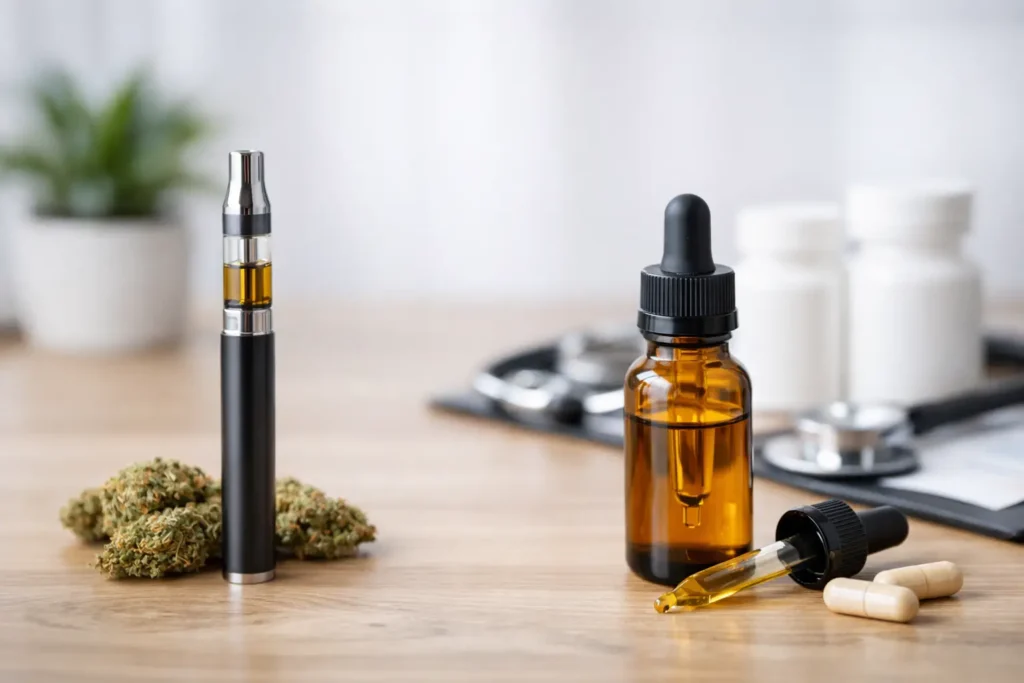
A lot of patients ask the same question once they start looking into medical cannabis treatment: when it comes to a vape vs oil prescription, which one is actually the better fit? The honest answer is that it depends on what symptoms you are treating, how quickly you need relief, how comfortable you are with dosing, and what your doctor believes is appropriate for your situation.
This is where many first-time patients get stuck. They are not just choosing a product type. They are choosing how treatment fits into real life – bedtime routines, work hours, pain flare-ups, anxiety triggers, and the need to stay within a safe, legal, doctor-guided plan.
Vape vs oil prescription: the core difference
The biggest difference between a vape prescription and an oil prescription is how the medication enters the body. Vapes are inhaled, which means the effects are usually felt more quickly. Oils are taken orally, usually under the tongue or swallowed, and they tend to take longer to work.
That timing changes the whole patient experience. A vape may suit someone who needs more immediate symptom relief, while an oil may suit someone who wants steadier, longer-lasting effects. Neither is universally better. They solve different problems.
Doctors also look at your medical history, your previous cannabis exposure, the symptoms you are trying to manage, and whether THC, CBD, or a combination may be suitable. A prescription is not just about preference. It is about matching a product format to a clinical need.
When a vape prescription may be suitable
For some patients, speed matters. If symptoms come on suddenly, a vape may be worth discussing with your prescribing doctor because inhaled medical cannabis is generally felt sooner than an oil.
This can be relevant for breakthrough pain, sudden spikes in anxiety, or symptoms that appear at specific times and need more immediate management. Some patients also find it easier to gauge the early effect with inhalation because they can start low and wait a short period before deciding whether they need more.
That said, vapes are not the right fit for everyone. If you have respiratory concerns, feel uncomfortable with inhalation, or want a format that feels more familiar and routine, your doctor may steer you toward oils instead. There is also the practical side. Some patients prefer a private, measured nightly dose rather than carrying a device or needing symptom relief on the go.
When an oil prescription may be suitable
Oils are often discussed with patients who want a longer-lasting effect and a more structured dosing routine. They can be easier to build into a morning or evening schedule, which is useful for symptoms that are ongoing rather than sudden.
For example, a patient managing persistent pain, poor sleep, or generalised anxiety may prefer an oil because the treatment plan can feel steadier and more predictable over time. Oils can also be appealing to first-time patients who want to avoid inhalation altogether.
The trade-off is speed. Oils usually take longer to take effect, so they may not be ideal if you are looking for quick relief during a flare-up. That delay can also make dosing feel less intuitive at first, especially if a patient takes more too soon because they think it is not working yet.
Onset and duration matter more than most people expect
When patients compare vape vs oil prescription options, they often focus on the product itself. In practice, the more useful comparison is onset versus duration.
A vape may act faster, but the effects may not last as long as an oil. An oil may take more time to begin working, but it may offer a longer window of symptom support. This is one reason some treatment plans include more than one format, depending on the patient and the doctor’s assessment.
A simple example is sleep. A patient who struggles to fall asleep may need a format that starts working within a useful time frame before bed. A patient who wakes during the night may need something with more staying power. These are different problems, even though both sit under the broad category of insomnia.
The same applies to pain. Background pain across the day is different from sudden pain spikes. Treatment works best when the prescription matches the pattern of symptoms, not just the diagnosis on paper.
Dosing feels different with vapes and oils
Dosing is another major factor. With oils, the dose is usually measured in millilitres, and the cannabinoid content is listed clearly on the product. This can feel straightforward for patients who want consistency and a set routine.
With vapes, the experience can feel more flexible, but that flexibility means patients need clear guidance. The number of inhalations, the strength of the product, and the timing between doses all matter. Some patients appreciate the ability to take a small amount and wait. Others find oils simpler because they can follow a clear schedule set by the doctor.
Neither format removes the need to start low and go slow. That principle matters with both THC and CBD products, especially for new patients. It is also why doctor guidance is essential. A good prescription plan is not just a product recommendation. It includes instructions on how to begin, when to adjust, and what side effects to watch for.
Side effects and lifestyle fit
Both oils and vapes can cause side effects, particularly if the dose is too high or the cannabinoid profile is not well matched to the patient. THC-containing products may cause dizziness, drowsiness, dry mouth, or impairment. CBD products are often better tolerated, but they still require proper medical oversight.
Lifestyle fit matters here. A patient with a regular evening routine may do well with an oil because it supports consistency. A patient whose symptoms vary unpredictably may want to ask whether a vape format offers more practical control. But lifestyle should never be the only factor. Safety, doctor guidance, and legal compliance come first.
Patients also need to think realistically about activities such as driving, work responsibilities, and family routines. If a product contains THC, impairment can be a serious issue. In Australia, driving with THC in your system can carry legal consequences, even with a prescription. That is one reason your treatment plan needs to be practical as well as effective.
Vape vs oil prescription in Australia: what doctors consider
In Australia, medical cannabis access is doctor-led, and that matters when comparing formats. A prescribing clinician is not simply choosing between two product categories. They are considering symptom type, severity, duration, patient history, previous treatment response, risk factors, and whether the patient understands safe use.
For a first-time patient, the most suitable option may not be the one they expected. Someone might assume a vape is easier because it works quickly, but their doctor may recommend an oil first because it offers a more controlled routine. Another patient might assume oil is the obvious starting point, only to find that rapid symptom episodes make a vape worth considering.
This is why the best question is rarely, “Which is better?” A more useful question is, “Which is more suitable for my symptoms, my routine, and my treatment goals?”
What first-time patients should ask before choosing
If you are new to medical cannabis, it helps to go into your consultation with a clear picture of your symptoms. Think about when they happen, how long they last, whether they build slowly or arrive suddenly, and whether you need help during the day, at night, or both.
It is also worth being honest about your comfort level. Some patients want a format that feels familiar and easy to measure. Others are mainly concerned with how quickly relief may begin. Neither approach is wrong, but clarity helps your doctor recommend something appropriate.
A good consultation should leave you understanding not just what has been prescribed, but why. That includes expected timing, dosing instructions, likely effects, possible side effects, and any practical precautions around daily life.
For patients using services such as Medical Marijuana Australia, that guided process can make the decision far less overwhelming. The goal is not to push one format over another. It is to help you access legal treatment with enough clarity to use it safely and confidently.
The right prescription should feel like it fits your life, not like another thing to manage. If you are weighing up a vape against an oil, the best next step is a proper medical discussion grounded in your symptoms, not guesswork. A calm, informed start usually leads to a better treatment experience.
