
Blogs
CBD vs THC Treatment: What Patients Should Know
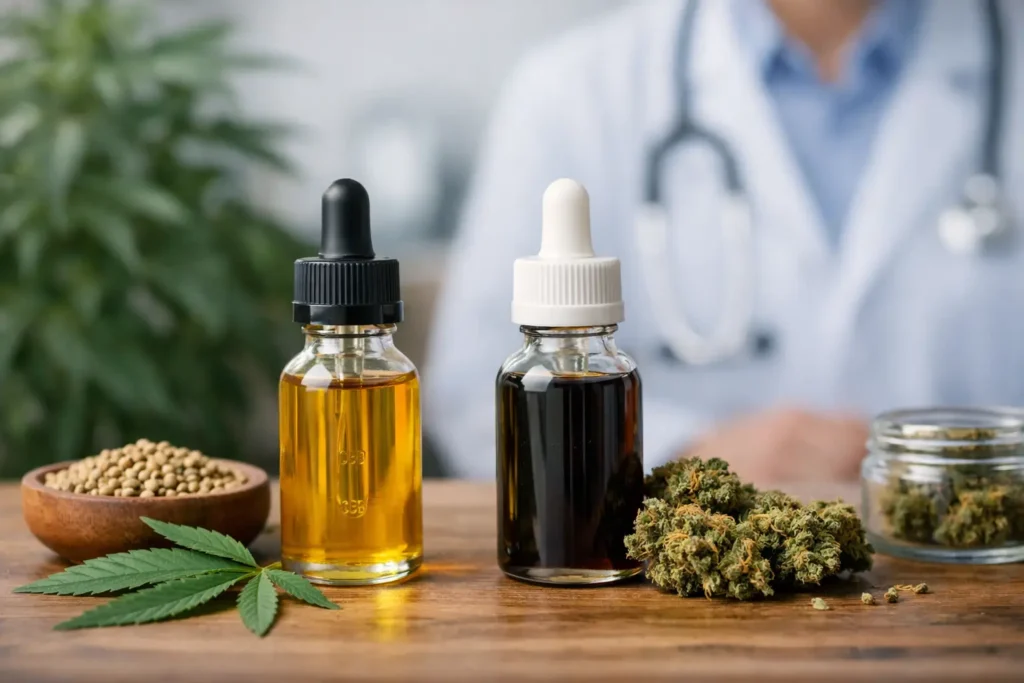
If you are weighing up medical cannabis for pain, sleep, anxiety or another ongoing health concern, the CBD vs THC treatment question usually comes up early. Most patients are not asking for chemistry lessons. They want to know what each option may help with, how it might make them feel, and what a doctor is likely to consider before prescribing.
That is the practical starting point. CBD and THC both come from the cannabis plant, but they are not interchangeable. They can affect the body differently, suit different symptoms, and carry different side effect profiles. For some patients, one clearly makes more sense. For others, a balanced approach may be worth discussing with a prescribing doctor.
CBD vs THC treatment: the core difference
CBD, or cannabidiol, is generally chosen when patients want symptom support without the intoxicating effects commonly associated with cannabis. It does not usually cause a “high” and is often discussed in relation to anxiety, inflammation, pain and seizure-related conditions. Many patients are drawn to CBD because it feels like a lower-friction entry point into medical cannabis treatment.
THC, or tetrahydrocannabinol, is the main psychoactive compound in cannabis. It is more likely to affect mood, perception, reaction time and alertness. That does not make it a bad option. In fact, for some patients, THC may provide stronger symptom relief, especially where pain, sleep disruption, poor appetite or nausea are involved. The trade-off is that it can also be more impairing and may not suit every patient, situation or time of day.
This is where medical guidance matters. The right choice is rarely about whether CBD is “good” and THC is “stronger”. It is about matching treatment to symptoms, tolerance, lifestyle and safety considerations.
When CBD treatment may be the better fit
CBD is often considered when a patient wants a treatment option that is less likely to interfere with daily function. If you work, drive, care for children, or simply prefer to stay clear-headed, that can be an important part of the conversation.
Doctors may look at CBD-first treatment for patients dealing with anxiety symptoms, mild to moderate pain, inflammation, or sleep issues where sedation and psychoactive effects are not desirable. Some people also prefer to start with CBD because they are new to cannabis and want to ease into treatment more cautiously.
That said, CBD is not automatically mild in effect just because it is non-intoxicating. Some patients report meaningful improvements, while others find it too subtle on its own. Response can vary depending on the condition being treated, the dose, and the product format.
CBD may also take time and dose adjustment to assess properly. Patients sometimes expect immediate results, particularly if they have heard broad wellness claims online. In a medical setting, the approach is usually more measured. The goal is not hype. The goal is to see whether symptom relief is real, sustainable and tolerable.
When THC treatment may be considered
THC tends to enter the conversation when symptoms are more severe, more persistent, or less responsive to other options. Chronic pain is a common example. So are insomnia, chemotherapy-related nausea, muscle spasms and appetite loss.
For some patients, THC offers stronger relief where CBD alone has not done enough. That can be especially relevant at night, when the ability to rest may matter more than staying fully alert. A carefully prescribed THC oil, flower or other format may be considered depending on the patient and the clinical goal.
Still, THC is not a simple upgrade from CBD. It comes with more practical considerations. It may impair driving, reduce concentration, trigger dizziness, or worsen anxiety in some people, particularly at higher doses. Patients with a personal or family history of psychosis, or those who are sensitive to psychoactive effects, may need a more cautious pathway.
The key point is that THC treatment can be highly useful, but it needs proper supervision and realistic expectations.
CBD vs THC treatment for common conditions
The condition being treated often shapes the conversation more than the ingredient itself.
For anxiety, many patients assume CBD is the obvious choice, and in some cases it is. It may be preferred where calm without intoxication is the goal. THC can help some people relax, but in others it may increase anxious feelings, especially if the dose is too high or the product is not well matched.
For chronic pain, the answer is less clear-cut. CBD may help with inflammation and baseline symptom management, while THC may play a larger role when pain is severe, disruptive or affecting sleep. Some patients do best on combined treatment rather than a strict CBD-only or THC-only approach.
For insomnia, THC is often discussed because of its sedating effects, but that does not mean it is always the first or best choice. CBD may still be useful, especially where sleep disruption is tied to stress, discomfort or nervous system overactivity. What matters is why the person is not sleeping.
For nausea and appetite issues, THC may have a stronger role. For daytime function and symptom control without cognitive effects, CBD may be more attractive.
This is why treatment plans are built around the patient, not just the product category.
Side effects and daily life considerations
One of the biggest differences in the CBD vs THC treatment decision is how each option fits into real life.
CBD is generally seen as easier to integrate into daytime routines. Side effects can include tiredness, dry mouth, gastrointestinal upset or appetite changes, but it is usually less disruptive from a cognitive point of view.
THC requires more care. Depending on dose and formulation, it may cause drowsiness, euphoria, dizziness, dry mouth, impaired coordination or short-term memory issues. That has obvious implications for driving, work, and safety-sensitive tasks. In Australia, patients need to be especially aware of road rules and drug driving laws, because legal prescription access does not automatically remove those risks.
This practical side of treatment matters just as much as symptom relief. A product that helps pain but makes it hard to function at work may not be the right fit. A product that is gentler but not effective enough may also fall short. Good prescribing aims for a workable middle ground.
Why some patients use both CBD and THC
Medical cannabis treatment is not always either-or. Some patients are prescribed both CBD and THC because the combination may provide broader symptom coverage with better balance.
For example, a patient might use CBD during the day to support calm and function, then a THC-containing product at night to help with pain or sleep. In other cases, a balanced formulation may reduce the amount of THC needed while still supporting symptom control.
This approach can make sense when symptoms occur across the day in different ways. It can also help where the aim is to keep psychoactive effects as low as possible while still getting enough benefit. Again, this is something to work through with a doctor rather than guessing from product labels alone.
How doctors decide what may suit you
A prescribing doctor will usually look at more than just your main condition. They may consider your medical history, current medications, past cannabis use, mental health background, work requirements and whether you need to drive.
They will also consider how cautious the starting plan should be. First-time patients are often started low and adjusted gradually. That is particularly true for THC products. Product format matters too. Oils may suit patients who want slower, steadier dosing. Inhaled products may have a faster onset but are not right for everyone.
A clear treatment pathway should feel structured, not confusing. That is one reason many patients prefer a doctor-guided online process through services such as Medical Marijuana Australia, where education and prescription access are built into the same experience.
The better question is not CBD or THC
Patients often begin by asking which is better. The more useful question is which treatment profile fits your symptoms, routine and risk factors.
CBD may be the better starting point if you want a clearer head, lower impairment risk and a more conservative entry into treatment. THC may be more appropriate if symptoms are severe, night-time relief is a priority, or other options have not delivered enough benefit. For many people, the answer sits somewhere in between.
The most helpful next step is not choosing a product based on marketing claims or what worked for someone else. It is having a proper medical conversation about what you are treating, what matters in your day-to-day life, and what type of cannabis treatment can realistically support both. That is where confidence starts.
