
Blogs
Best Cannabis Formats for Pain Relief
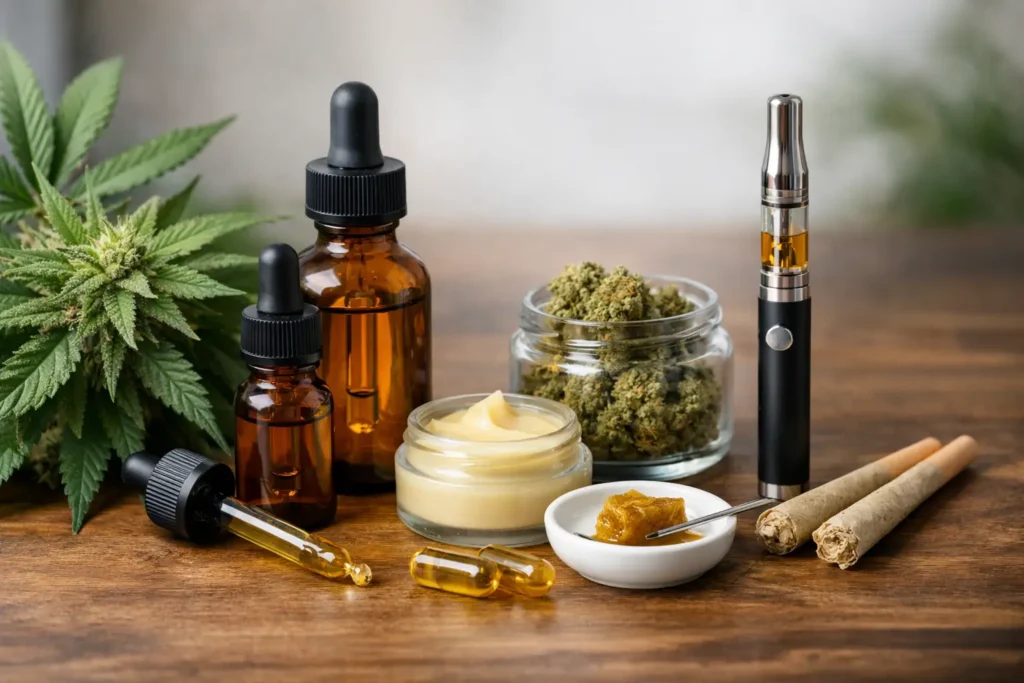
When pain starts shaping your day – whether it is persistent back pain, nerve pain, arthritis or flare-ups that make sleep harder – the format of medical cannabis you choose can matter almost as much as the product itself. The best cannabis formats for pain are not the same for everyone, because speed, duration, symptom pattern and your comfort level all play a part.
For some patients, the goal is fast relief during a pain spike. For others, it is steadier background support that helps them get through work, sleep more comfortably or reduce the constant strain of living with symptoms. That is why choosing between oils, flower, capsules, edibles or vapes should be a practical decision, guided by your doctor and matched to how your pain actually behaves.
How to think about the best cannabis formats for pain
A good starting point is to look at three things – how quickly you need relief, how long you want it to last, and how precisely you want to manage dose changes.
If your pain comes in waves, a faster-acting format may be more useful than one that takes an hour or more to work. If your symptoms are steady from morning to night, something with a longer duration can make more sense. And if you are new to medical cannabis, dose control is often one of the biggest deciding factors.
There is also the question of THC and CBD balance. Some patients use CBD-dominant products for a gentler daytime option, while others may be prescribed THC-containing products where stronger symptom relief is needed. The right format and cannabinoid profile should always sit within a doctor-approved treatment plan.
Oils are often the simplest place to start
Cannabis oils are one of the most common entry points for pain management, particularly for patients who want a controlled, measured and discreet option. They are usually taken under the tongue or swallowed, depending on the product instructions and prescribing advice.
The main advantage of oils is consistency. You can measure a set amount, increase gradually if advised, and build a routine around it. For ongoing pain, that can be very helpful. Many patients prefer oils because they fit easily into everyday life and do not feel intimidating.
The trade-off is timing. Oils are not usually the fastest option, especially if swallowed rather than absorbed sublingually. They can suit patients looking for longer-lasting support, but may feel too slow for sudden pain flares.
For first-time patients, this format is often appealing because it supports a cautious start-low, go-slow approach. That matters when you are trying to find symptom relief without taking more than you need.
When oils may be a good fit
Oils often suit people with persistent daily pain, evening discomfort, sleep disruption linked to pain, or those who want a format that is easy to dose and simple to store. They can also work well for patients who prefer not to inhale medication.
Flower can offer faster relief, but it is not for everyone
Medical cannabis flower is typically used with a dry herb vapouriser rather than smoked. For some pain patients, the key benefit is speed. Inhaled cannabis usually takes effect more quickly than oils or edibles, which can make flower useful during breakthrough pain or periods when symptoms spike suddenly.
This faster onset gives patients and prescribers a different kind of flexibility. Smaller inhalations can sometimes help people assess the effect sooner, rather than waiting longer to see how an oral product lands.
That said, flower is not always the best fit for every patient. Some people simply do not want an inhaled format. Others may prefer the routine and discretion of oils or capsules. There is also a learning curve with inhalation technique, and the effects may not last as long as slower-onset oral options.
For patients with intermittent pain, though, flower can be a practical part of a treatment plan when prescribed appropriately.
Vapes may suit rapid symptom control
When patients talk about needing something that works quickly, vape formats often come up for that reason. Like flower used with a vapouriser, they are generally chosen for faster onset rather than long duration.
This can make them useful for short, intense pain episodes or for patients who need a more immediate option alongside a longer-acting baseline product. In real terms, that might mean using an oil for general day-to-day management and a faster inhaled option for flare-ups, if prescribed.
The main point here is that faster does not automatically mean better. If your pain is constant and predictable, relying only on a short-acting format may leave you chasing relief throughout the day. A doctor-guided combination approach can sometimes offer more balance.
Capsules and edibles can be convenient, but slower
Capsules and edible-style formats appeal to patients who want familiarity and convenience. They are easy to take, discreet, and do not require inhalation. For some people, that alone makes them more comfortable than other options.
The challenge is that oral products usually take longer to take effect. Digestion can also influence the timing and intensity of the experience, particularly with THC-containing products. That means they may be less predictable than some patients expect, especially at the start.
For pain that tends to build over the evening or interrupt sleep, this slower onset may still be perfectly reasonable. But for rapid relief, capsules and edibles are rarely the first choice.
Dose caution matters here. Because the effects can take time to appear, taking more too soon is a common mistake. This is one reason doctor guidance is so important when using oral cannabis products for pain.
Which cannabis format is best for different types of pain?
The best cannabis formats for pain often depend on the pattern of the pain rather than the diagnosis name alone.
For constant daily pain, oils or capsules may offer a steadier option. For breakthrough pain or sharp flare-ups, flower or vape formats may be more practical because they act faster. For pain that disrupts sleep, a longer-lasting oral product may be worth discussing with your prescriber.
Nerve pain, musculoskeletal pain, inflammatory pain and pain linked to other chronic conditions can all respond differently from person to person. Two patients with the same condition may still prefer completely different formats because their routines, sensitivity to THC, and treatment goals are not identical.
That is why there is no single best product category for everyone. The right question is not just, what is strongest? It is, what fits my symptoms, my schedule and my tolerance in a safe, manageable way?
What matters most when choosing a format
Speed and duration are important, but they are not the only factors. Daily function matters too. If you need symptom support during working hours, a format with a gentler effect profile may be more appropriate than one that feels too heavy. If privacy matters, oils, capsules and gummies may feel easier to manage than inhaled products.
Cost can also influence the decision. Some formats may seem more convenient, while others may offer better value depending on the dose and frequency of use. Practical considerations such as portability, storage, taste and ease of routine all add up over time.
There is also a legal and clinical side to keep in mind. In Australia, medical cannabis should be accessed through the proper prescription pathway, with treatment matched to your health history and current medications. That is particularly important for pain patients who may already be managing other therapies.
A doctor-guided plan usually works better than trial and error
Pain can make people want quick answers, especially when they have already tried multiple treatments. But with medical cannabis, trial and error without guidance can lead to poor dosing, the wrong format, or expectations that do not match how the product actually works.
A structured consultation helps narrow the field. Instead of guessing, you can discuss when your pain happens, how intense it gets, whether sleep is affected, and whether you want a daytime, nighttime or flexible option. That makes it easier to choose a format based on function, not hype.
For patients using a guided access service such as Medical Marijuana Australia, that process can feel clearer and less overwhelming. The goal is not just access to products. It is access to the right type of support, within a legal and medically supervised framework.
The best starting point is usually the one you can use consistently
Patients often assume the best cannabis format for pain must be the fastest or strongest. In practice, the best option is often the one you can use confidently, dose carefully and fit into daily life without added stress. That might be an oil with steady effects, a fast-acting inhaled format for flare-ups, or a combination plan your doctor helps tailor over time.
If you are considering medical cannabis for pain, the most useful next step is not choosing a product based on guesswork. It is getting clear advice that matches the way your symptoms actually show up – so treatment feels manageable, legal and built around real relief.
