Blogs
Medical Cannabis vs Black Market Cannabis
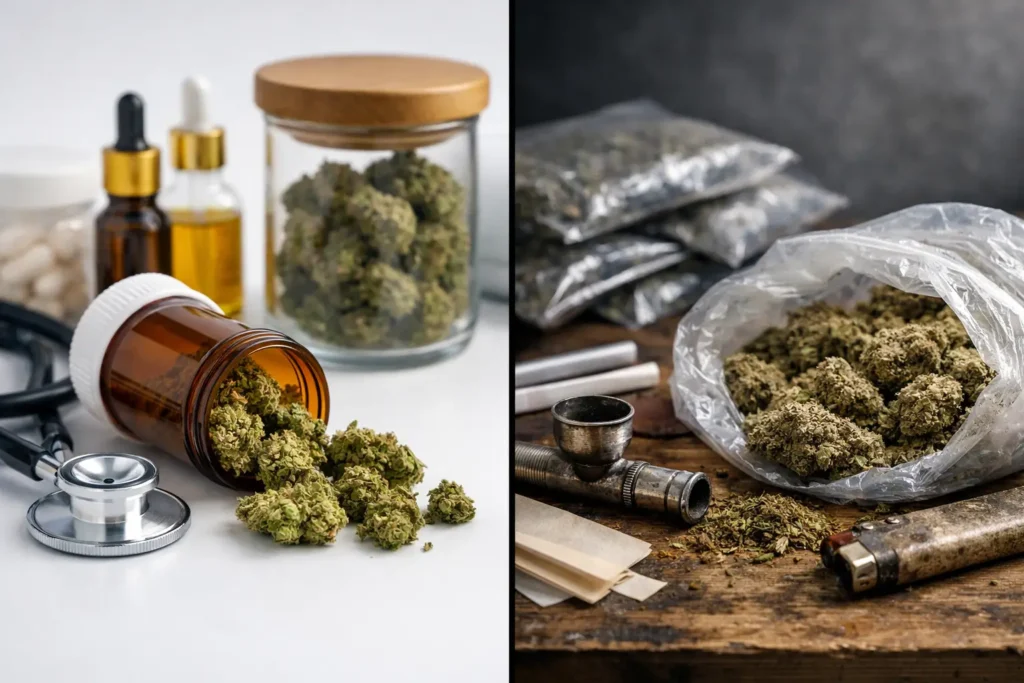
When people weigh up medical cannabis vs black market cannabis, the biggest difference is not just where it comes from. It is whether you know what you are taking, why you are taking it, and what support you have if something goes wrong. For many Australians managing chronic pain, anxiety, insomnia or other ongoing symptoms, that distinction matters more than price or convenience.
Cannabis can look similar on the surface whether it comes from a prescription pathway or an illegal source. But once you get past appearance, the gap becomes much clearer. Safety standards, product consistency, legal protection and medical oversight all change the experience in practical ways.
Medical cannabis vs black market cannabis: what really changes?
The simplest way to understand medical cannabis vs black market cannabis is this: one sits inside a regulated healthcare framework, and the other does not. That affects everything from product quality to how confidently you can use it.
With medical cannabis, a doctor assesses your symptoms, health history and treatment goals. If it is appropriate, you may receive a prescription for a specific product type such as oil, flower, vape or another approved format. The product is supplied through legal channels with labelled cannabinoid content and batch information.
Black market cannabis works very differently. There is usually no reliable product label, no formal quality control and no medical guidance. A seller might describe something as strong, calming or good for sleep, but those claims are not the same as verified cannabinoid content or clinical suitability.
That does not mean every illicit product is automatically contaminated or unusable, and it does not mean every prescribed product will suit every patient perfectly. Cannabis treatment is still individual. But regulated access gives you a much safer starting point.
Quality and consistency are not small details
One of the biggest issues with black market cannabis is inconsistency. The same strain name can mean completely different things from one source to another. Even if a product seems effective once, there is no guarantee the next batch will feel the same.
That creates problems for anyone trying to manage symptoms in a stable, repeatable way. If you are using cannabis for sleep, for example, you need to know whether the product is likely to produce the same effect each night. If you are using it for pain during the day, sudden variation in THC strength can affect focus, driving safety and daily routine.
Medical cannabis is not simply about legality. It is also about predictable formulation. Products are labelled with cannabinoid content, which helps patients and prescribing doctors make informed decisions about dose and product selection. If your doctor adjusts your treatment, that adjustment is based on a known product rather than guesswork.
This matters just as much for CBD products as it does for THC. A black market product sold as CBD-rich may contain far less CBD than claimed, or far more THC than expected. For someone new to cannabis, that can lead to an unpleasant experience and reduced confidence in treatment overall.
Safety goes beyond what is in the product
People often focus on contamination, and that is a real concern. Illicit cannabis may contain mould, pesticides, heavy metals or residues from poor handling and storage. Because there is no regulated testing pathway behind black market supply, you are relying on trust rather than evidence.
But safety is also about how the product fits your health profile. Medical cannabis patients have the benefit of doctor guidance around dosing, side effects and interactions with other medicines. That is especially important for people taking antidepressants, sedatives, pain medicines or treatments for chronic conditions.
Without that oversight, patients may end up using too much, choosing the wrong product type, or taking cannabis at times that interfere with work, sleep patterns or existing treatment plans. For some people, black market use becomes trial and error in the least helpful sense of the phrase.
A regulated pathway does not remove all risk. Cannabis can still cause side effects such as dizziness, dry mouth, fatigue or anxiety, depending on the product and dose. The difference is that those effects can be managed within a treatment plan rather than dealt with alone.
The legal difference matters more than many people realise
In Australia, prescribed medical cannabis is legal when accessed through the proper process. Black market cannabis is not. That single point can affect peace of mind, employment concerns, travel planning and general confidence in your treatment choices.
For patients already dealing with ongoing health issues, the legal risk attached to illicit cannabis can add another layer of stress. There is also the issue of disclosure. If you are discussing your health with a GP or another treating practitioner, it is much easier to have an open, constructive conversation when your cannabis use is lawful and medically supervised.
Legality does not mean there are no rules. Patients still need to follow medical advice and understand that prescribed cannabis may affect driving or workplace obligations, depending on the product and circumstances. But legal access gives you a structured framework instead of uncertainty.
Why doctor guidance changes the experience
A lot of people come to medical cannabis after trying to manage symptoms on their own for months or years. Some have already used illicit cannabis and found it helpful. Others are curious but cautious and want a legitimate way to explore whether it might fit into their care.
Doctor guidance can make that process far less confusing. A prescribing clinician can help identify whether THC, CBD or a combination may be more suitable, what form of product might fit your needs, and how to start low and adjust carefully.
That support is often underestimated. It can be the difference between writing cannabis off after one poor experience and finding a treatment approach that actually helps. For example, someone who felt too sedated from an unlabelled black market product might do better with a lower-THC option or a CBD-dominant product. Without proper guidance, they may never know that.
This is one reason services such as Medical Marijuana Australia focus on both education and access. For many patients, the hardest part is not deciding they want help. It is figuring out the legal and medical process in a way that feels straightforward.
Cost is a real factor, but it is not the whole picture
Some people compare medical cannabis vs black market cannabis and focus immediately on price. That is understandable. Upfront cost can influence any health decision, especially for patients managing long-term conditions.
But a cheaper product is not always better value if it is inconsistent, ineffective or creates avoidable risk. If you buy illicit cannabis and the strength changes from batch to batch, you may end up using more than expected or struggling with side effects that disrupt work and daily life. If a product is contaminated or unsuitable, the cost calculation shifts quickly.
Medical cannabis can involve consultation fees and prescription costs, so it is not always the cheapest option on paper. What many patients are really paying for is reliability, legal access and clinical support. For someone seeking ongoing symptom management rather than occasional use, that can be a worthwhile trade-off.
Who is most likely to benefit from legal access?
People who need consistency tend to benefit most from the medical pathway. That includes patients using cannabis for chronic pain, anxiety, sleep issues or other conditions where repeatable effects matter. It also suits people who want more confidence around what they are taking and how to use it responsibly.
It can be especially helpful for first-time patients who feel unsure about THC, dosing or product formats. Starting with a doctor-guided process is often much less stressful than relying on advice from friends, online forums or an unregulated seller.
That said, some people delay legal access because they assume the process will be complicated or overly clinical. In reality, modern telehealth and e-prescription pathways have made it much simpler than many expect. The process is designed to help eligible patients move from questions to treatment with clarity, not confusion.
Medical cannabis vs black market cannabis for long-term confidence
If you are thinking seriously about medical cannabis vs black market cannabis, the best question is not which one is easier to get in the short term. It is which option gives you the safest, clearest and most sustainable path if cannabis becomes part of your ongoing care.
For symptom management, confidence matters. Confidence in the product. Confidence in the dose. Confidence that you are acting within the law and under professional guidance. That does not guarantee cannabis will be right for everyone, but it gives you a far better foundation for finding out.
If you are considering cannabis for a health condition, a legal, doctor-guided pathway gives you something the black market cannot – a treatment process built around your wellbeing, not guesswork.
