
Blogs
Oil vs Flower Cannabis: What Suits You?
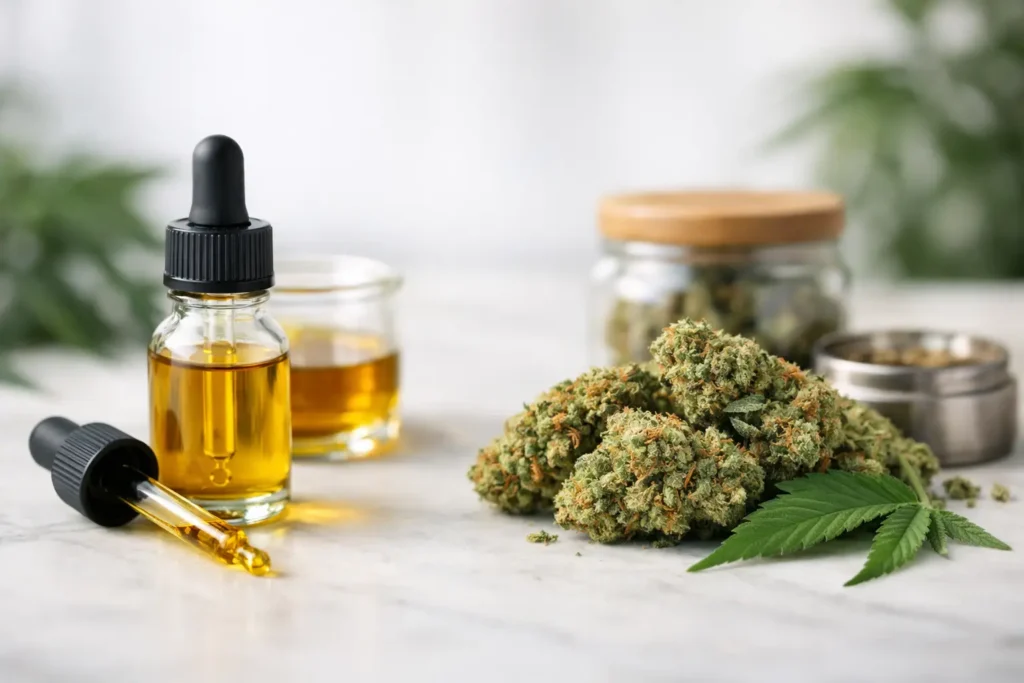
One of the first questions new patients ask is whether oil vs flower cannabis is the better place to start. It is a fair question, because the right format can shape how quickly you feel relief, how easy dosing is, and how confidently you can build a routine with your prescribing doctor.
For some people, oils feel more predictable and easier to fit into daily life. For others, flower offers faster symptom relief and more flexibility when symptoms flare. Neither option is automatically better across the board. The better choice usually depends on your condition, your lifestyle, your comfort with inhalation, and how much control you want over timing and dose.
Oil vs flower cannabis: the main difference
The clearest difference between the two is how they are taken and how they behave in the body. Cannabis oil is usually taken orally, often under the tongue or swallowed depending on the product and your doctor’s instructions. Flower is inhaled using an approved dry herb vapouriser rather than smoked.
That single difference affects almost everything else. Flower usually works faster, which can make it helpful for symptoms that come on suddenly, such as breakthrough pain or difficulty falling asleep. Oil tends to come on more slowly, but the effects can last longer, which may suit people looking for steadier symptom control over several hours.
This is why treatment plans are rarely one-size-fits-all. A patient managing overnight sleep disruption may need something different from a patient trying to stay functional through the workday with chronic pain or anxiety.
When cannabis oil may be the better fit
Cannabis oil is often the format people feel most comfortable with at the beginning. It can feel more familiar, more discreet, and more structured than inhaled products. For patients who want a routine that is easy to measure and repeat, oil often makes sense.
A major advantage of oil is dosing consistency. Because the cannabinoid content is measured per millilitre or per dose, it is usually easier to follow a start-low-and-go-slow plan. That matters for new patients, especially those who want to reduce the chance of taking too much too quickly.
Oil may also be a better fit if you prefer longer-lasting effects. While it generally takes longer to start working, many patients find the duration more useful for extended symptom coverage. That can be relevant for persistent pain, all-night sleep support, or people who do not want to re-dose as often.
There are trade-offs. The slower onset can be frustrating if your symptoms spike suddenly and you need quick relief. Oil can also feel less flexible in the moment. If you take too little, you may wait a while before realising it was not enough. If you take too much, the effects can last longer than you intended.
When flower may be the better fit
Flower is often chosen by patients who need a faster onset of effects. Because it is inhaled through a vapouriser, cannabinoids reach the bloodstream more quickly than most oral products. That speed can be useful for pain flares, sudden anxiety, or sleep issues where the problem is falling asleep rather than staying asleep.
Another advantage is dose control in real time. With flower, some patients find it easier to take a small amount, pause, and assess the effect before taking more. That can offer a level of flexibility that oral products do not always provide.
Still, flower is not automatically the simplest option. It requires a vapouriser, a bit more technique, and comfort with inhalation. Some patients do not like the taste or sensation, and others prefer to avoid inhaled treatment entirely. There is also the practical side – flower may be less convenient in certain settings and less discreet for some households or routines.
For many first-time medical cannabis patients, the question is not whether flower works. It is whether flower suits their daily life.
Oil vs flower cannabis for common patient goals
If your main goal is stable symptom control across the day, oil often has the edge. It suits patients who want a measured routine and fewer ups and downs. If your goal is quick relief when symptoms appear, flower often stands out because of the faster onset.
For insomnia, the answer depends on the pattern. If you struggle to fall asleep, flower may help because it acts quickly. If you wake repeatedly through the night or need longer coverage, oil may be more useful. Some patients are prescribed both for different parts of the same problem, but that should always be guided by your doctor.
For anxiety, the choice can be especially individual. Some patients prefer the slower, steadier feel of oil. Others value flower for rapid relief during acute episodes. The key point is that anxiety treatment needs careful dosing, particularly with THC-containing products, because the wrong dose can worsen symptoms rather than settle them.
For chronic pain, both formats can play a role. Oil may suit baseline control, while flower may be considered for breakthrough episodes. Again, this depends on the product type, cannabinoid profile, and your doctor’s treatment approach.
Dosing, safety and predictability
If you are new to medical cannabis, predictability matters more than people sometimes realise. It is not just about symptom relief. It is also about being able to work with your doctor, track what helped, and adjust safely.
Oil is often easier to document because doses are standardised. You can note the amount taken, the time, and the effect with less guesswork. Flower can also be dosed carefully, but the process is more variable because inhalation style, temperature, and the amount used can all influence the result.
That does not mean flower is unsafe or unreliable. It means it usually benefits from clearer patient education and a bit more confidence with technique. For some people, that learning curve is manageable. For others, oil feels more straightforward from day one.
No matter which format you use, the same principle applies: start with the lowest effective dose and increase only under medical guidance. More is not always better, and faster relief is not the only thing that matters.
Lifestyle, privacy and routine
The practical side of treatment matters. A product may look ideal on paper but not fit your routine, work schedule or home environment.
Oil is often easier to keep private and integrate into a structured day. It may suit patients who want a simple morning or evening routine without needing extra equipment in the moment. It can also feel more approachable for people who have never used cannabis before and want a medical format rather than something that feels recreational.
Flower can be highly effective, but it asks a bit more from the patient. You need a vapouriser, a suitable space, and time to use it properly. For some people that is no issue. For others, especially those juggling family life, shift work or shared living, it can be less convenient.
Cost can also influence the decision. Depending on the product and the amount used, one format may work out better value than the other. But price should not be judged in isolation. A cheaper product that does not meet your treatment needs is not really cheaper in any practical sense.
So, which should you choose?
If you want a simpler starting point, more measured dosing, and longer-lasting effects, oil may be the better first option. If you need faster relief and more moment-to-moment flexibility, flower may suit you better. If you have mixed symptom patterns, your doctor may consider whether each format has a place in your broader treatment plan.
What matters most is not choosing the most popular format. It is choosing the one that matches your symptoms, tolerance, confidence level and day-to-day life. That is where proper medical guidance makes a real difference.
For patients working through legal access in Australia, this decision should sit inside a doctor-guided plan rather than guesswork. Services such as Medical Marijuana Australia are designed to make that process clearer, so patients can understand their options and move forward with more confidence.
A good starting product is not the one that sounds strongest or fastest. It is the one you can use safely, consistently and comfortably enough to tell whether it is genuinely helping.
